Someone clicks your ListYourProject listing, lands on a page that never mentions the directory, and leaves. Or they find your blog pillar from Google, never see that you are listed anywhere, and treat you like every other unproven tab. The fix is not more ads. It is a deliberate link loop between your pillar content, your directory listing, and the page where you ask for money.
Internal linking sounds like an SEO chore. For founders using directories, it is mostly conversion hygiene: show the same story in the same words, pass trust both ways, and give referral traffic a next step that is not a dead end.
Why the listing and the pillar must recognize each other
A directory listing is a short pitch with a dofollow or discovery context. A pillar page is your long proof: the guide, comparison, or problem explainer that ranks and educates. When those two assets ignore each other, visitors experience two brands that happen to share a logo.
From the listing side, the outbound click should land on a page that continues the promise in the title and description. If the listing says you help bootstrapped founders get first backlinks, the landing page should open on that problem, not a generic hero with a vague product reel. From the pillar side, a contextual mention of your live listing tells readers you are discoverable in the same places they already browse tools, which is soft social proof without fake testimonials.
Search engines also prefer coherent clusters. A pillar that links to a relevant listing URL, and a site that links back to that pillar from related pages, creates a clear topical path. You do not need a hundred links. You need a few honest ones that match intent. If you are still mapping a broader calendar, keep this loop separate from a full 30-60-90 day SEO plan. Today you are wiring three surfaces, not rebuilding your whole content roadmap.
Map the three nodes: pillar, listing, pricing
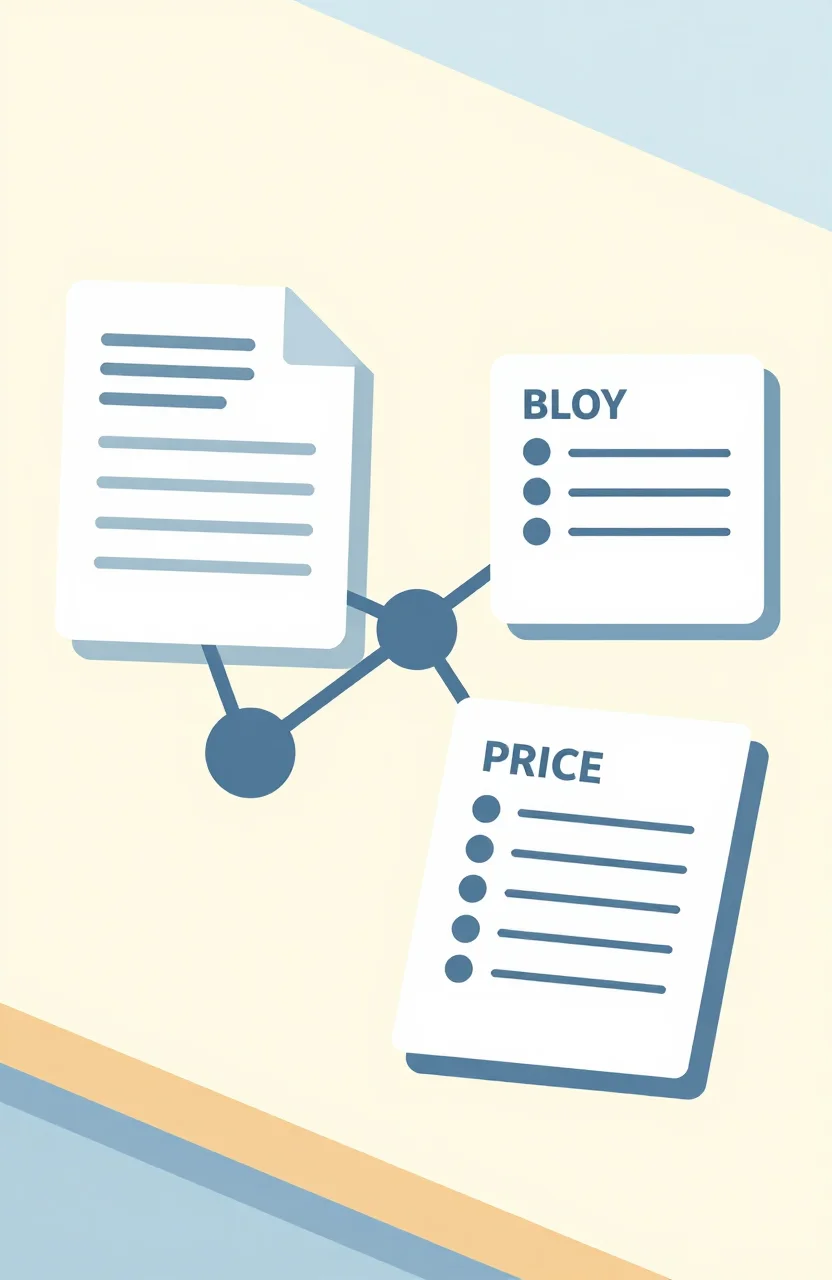
Draw a tiny triangle before you edit anything.
Node one: your best pillar. That might be a long guide on directories your product solves, a launch checklist, or a comparison article you already published. It should attract informational traffic and explain the category in your own words.
Node two: your ListYourProject listing URL inside the directory. That page is where browsers and scrapers meet your short pitch, category, and coupon. Treat it as a public sales card you control from your dashboard.
Node three: the commercial close. For most SaaS and side projects that is pricing on your own site, a signup URL, or a demo form. Directory traffic that never sees a clear offer dies in curiosity.
Ideal paths look like this:
- Directory listing → pillar or homepage section that matches the listing copy → pricing or signup
- Pillar article → soft CTA to your listing (proof you are listed) and a direct CTA to pricing
- Pricing page → short "also listed on" line linking back to the directory listing for transparency
You do not need every path on day one. Prioritize listing → matching landing page → pricing. Then add the pillar → listing mention once the listing is live and indexed.
How to link from the pillar without sounding like spam
Place one contextual link inside the body where a human would naturally want proof or a place to try the product. Example: after you explain how directory discovery works for buyers, link to your own listing as a live example. Anchor text should describe the destination, not stuff keywords. "See our ListYourProject listing" or "browse our listing in the project directory" beats "best SaaS backlinks 2026."
Keep the surrounding paragraph useful even if the reader never clicks. The link is a bridge, not the only reason the section exists. One link per pillar is usually enough. Two is fine if one points to the listing and another to pricing with different intents (explore vs buy).
Avoid a footer dump of every directory you ever submitted. That pattern looks automated and dilutes attention. If you maintain several listings, link the one that matches the article's audience. An AI-tool pillar should point to the AI-relevant listing category, not a random personal-site entry.
Refresh the pillar when the listing title or coupon changes. Mismatched claims between article and listing kill trust faster than a missing link.
How to aim directory traffic at pages that convert
On the listing itself, choose the destination URL with intent. Sending everyone to a cinematic homepage is lazy. Prefer:
- A pillar section that expands the listing promise, if the visitor needs education
- A product page with screenshots that match the listing images
- Pricing when the listing already sold the outcome and the visitor is ready to compare cost
Use a dedicated UTM or path so you can see which listings feed which pages. When analytics show directory sessions bouncing on a vague homepage, change the listing URL to a tighter page. That single edit often outperforms rewriting the entire listing copy.
On-site, greet directory visitors with continuity. If the listing mentioned a coupon, the landing page should acknowledge coupons near the top or in pricing. If the listing named an audience ("for indie makers"), the first screen should speak to that audience. Continuity is the internal-link strategy people feel even when they never notice the HTML.
From pricing back to the listing, a single sentence works: you are publicly listed, here is where, and the details match what they already read. That loop reassures cautious buyers who opened both tabs.
A simple maintenance checklist so the loop does not rot
Internal links rot quietly. Coupons expire. Pillars get rewritten. Listings change categories. Put a 15-minute review on your calendar after any major product update.
Check that the listing URL still resolves, the destination still matches the pitch, and the pillar still describes the same product. Confirm pricing still reflects the offer mentioned in the listing. If you publish a new pillar that better matches buyer intent, move the primary link there and demote the old page to a supporting article with a cross-link.
When you add a second product, do not reuse the same listing link everywhere. Split nodes. Each product gets its own triangle. Shared blog posts can mention both, but each CTA should land on the matching listing and pricing pair.
If you only do one thing this week: open your live listing, click through as a stranger, and ask whether the next page continues the story. Then open your best pillar and ask whether a skeptical reader can see you are listed somewhere real. Fix the gaps with two or three relative links and matching copy. That is how directory referrals and organic readers start feeding the same trust path instead of leaking into separate dead ends.