Free Backlinks Still Cost Time
They are free of money, not free of hours. Every profile you create, every review you chase, and every article you draft spends the same scarce resource bootstrapped founders protect most carefully: attention. The useful question is not "where can I get a free link?" It is "what return do I get for the minutes I spend?"
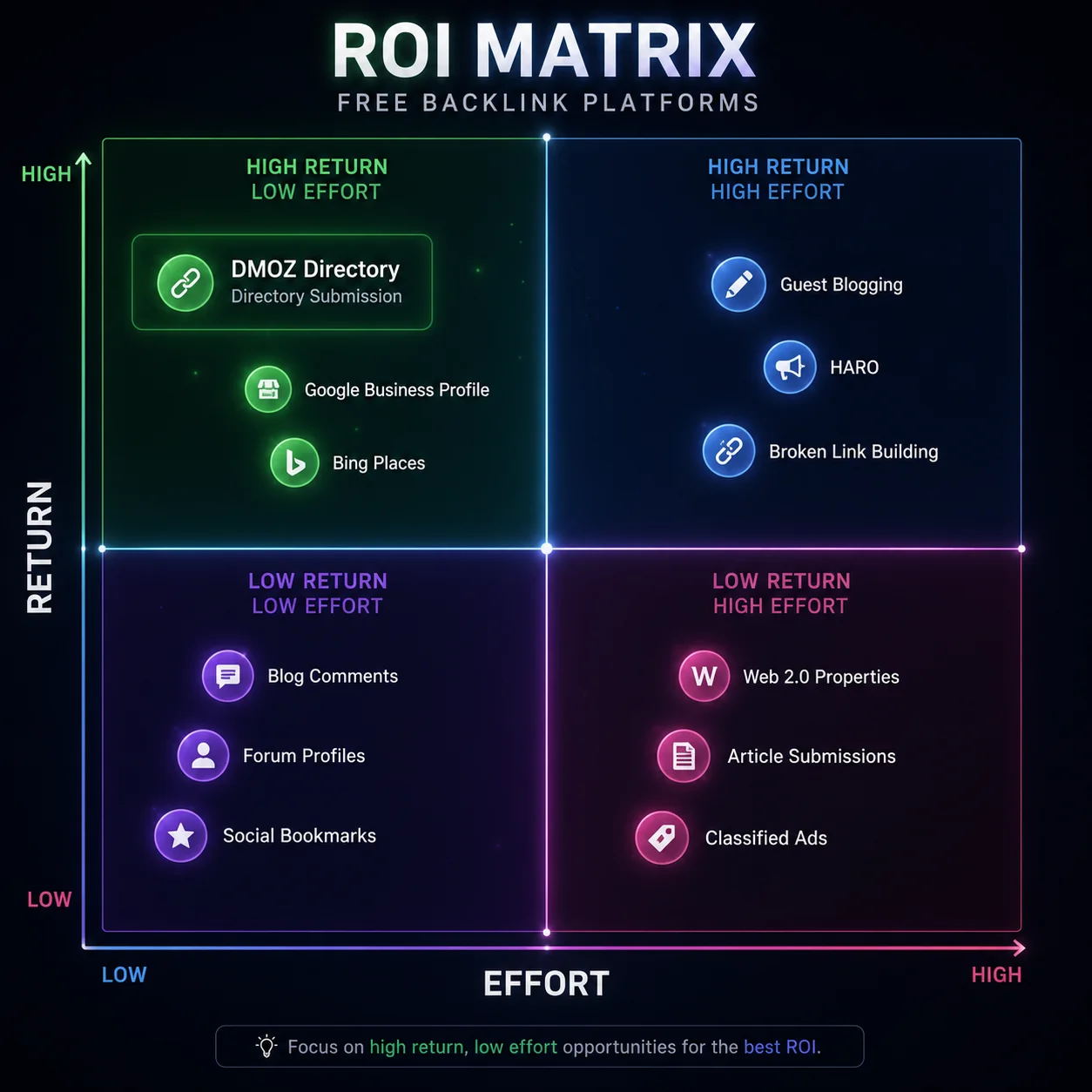
A five-minute listing on a curated, high-authority directory can deliver a permanent dofollow link and a small stream of referral traffic. Two hours spent on a guest post that never gets accepted delivers neither. This guide sorts free backlink opportunities by effort tier so you can front-load the highest returns, then layer in slower plays without burning your week.
We focus on platforms that are still active, still accept free submissions, and still give measurable value through dofollow links, real traffic, or both. If you want a plain definition of what a backlink is before you start collecting them, read what is a backlink. Then come back and build a short list you can finish.
High Return, Low Effort Quick Wins
These take under ten minutes each and usually produce a permanent link from a strong domain. Do them in one sitting. Treat this block as your free link foundation before you touch anything that needs reviews, assets, or a writing habit.
- ListYourProject - A high-ROI free dofollow listing for indie and SaaS projects. Create your account, submit once, and the link can go live immediately. Pair it with a scan of the directory so your category and positioning match how founders already browse.
- Crunchbase - Free company profile with a dofollow backlink, plus investor and partner visibility as a side effect.
- GitHub - A public repo and profile give dofollow paths in your bio and README. Useful even if your product is not open source: docs, changelogs, and issue templates still earn trust.
- LinkedIn Company Page - Standard company setup includes a link to your site and doubles as social proof when people research you.
- Indie Hackers - Founder profile with a dofollow backlink, plus a community that still reads launch posts and milestone updates.
- Product Hunt Maker Profile - Your maker profile carries a backlink. Active makers also pick up referral traffic around launches.
Budget forty-five to sixty minutes for the full set. You walk away with roughly six backlinks from domains that search engines and humans already trust. That is usually the best free link hour you will spend all year. If you are deciding how much free work to do before paying for links, keep a free-first link budget in mind so this batch stays intentional.
Skip vanity spreadsheets. Finish ListYourProject first, then knock out Crunchbase, GitHub, LinkedIn, Indie Hackers, and Product Hunt before you open a second browser window for review sites.
Medium Effort Plays That Also Bring Traffic
These need more setup: richer profiles, screenshots, categories, or early reviews. Plan twenty to thirty minutes each, then expect a longer tail of traffic as the listing matures. The SEO link is the baseline; the buyer-intent traffic is why they still deserve a slot on a bootstrapped calendar.
- G2 - Product page plus reviews. Dofollow backlink, and more reviews usually means more qualified clicks.
- Capterra - Submit through Gartner Digital Markets. One good submission can surface you on Capterra, GetApp, and Software Advice.
- SourceForge - Free software listing with a dofollow backlink and a large monthly audience that still shops for tools.
- Trustpilot - Company profile with a dofollow link. Reviews also improve conversion when prospects compare vendors.
- SaaSHub - Free SaaS marketplace listing with high-intent browsing and a dofollow link.
- BetaList - Strong for pre-launch or early products that want dofollow exposure before a wider launch.
- AlternativeTo - List yourself as an alternative to competitors. People arriving here already intend to switch.
Spread this tier across two or three weeks so review collection does not stall shipping. G2, Capterra, and Trustpilot compound: each new review can lift visibility long after the profile is created.
If your product has clear AI features, fold a short AI-directory pass into the same weeks rather than inventing a separate campaign. Futurepedia, There is An AI For That, Toolify, AI Tool Hunt, and TopAI.tools still accept quality free listings while that niche keeps growing. Treat them as optional add-ons under this medium-effort bucket, not as a parallel strategy.
Lower-priority but still valid one-and-done profiles belong here too once the review sites are moving: AngelList / Wellfound, F6S, SlideShare, Bing Places, GoodFirms, and Clutch. Set them up once, verify the URL, and move on. Do not let them crowd out ListYourProject or the review platforms that send traffic.
Ongoing Habits Worth Keeping
Some free links only appear if you show up regularly. The upside is compounding: each post, answer, or video can add another path to your site and grow an audience that already cares about your niche.
- Dev.to - Publish one or two practical articles per week. In-article links are often dofollow, and developers still engage with useful write-ups.
- Hashnode - Similar cadence to Dev.to, with strong author-bio linking for technical founders.
- Medium - In-article links are often nofollow, but profile links and traffic from a well-timed piece can still matter.
- Substack - Newsletter posts can include dofollow links, and the list itself becomes an owned channel beyond SEO.
- YouTube - Channel and video descriptions can carry dofollow links when you publish consistently.
- Stack Overflow - Helpful answers in your domain send long-lived traffic, and your profile can include a site link.
Pick one primary platform and protect a weekly slot. Twelve months of one Dev.to article per week is fifty-plus opportunities for dofollow mentions from a trusted developer site, plus readers who recognize your product name. Depth beats a thin presence on every network.
Use publishing to support products you already listed. Link to your ListYourProject page, docs, or a concrete tutorial rather than bare homepage spam. Readers and search engines both prefer relevance.
What to Avoid and a Simple Weekly Plan
Free does not mean safe. Some "opportunities" waste time or dilute your profile with junk neighborhoods. Keep the bar high and the calendar short.
What to avoid
- Link farms and FFA pages that Google ignores
- Automated mass-submission tools that dump you into dead or spammy directories
- Blog comment spam that burns hours and can flag your domain
- Low-quality social bookmarking sites overrun by bots
Fifty clean links from living platforms beat five hundred links from garbage directories. If a site fails a sixty-second spam check - opaque ownership, wall-to-wall outbound spam, or no real human moderation - skip it. Curated listings beat volume every time for bootstrapped sites.
Also watch the follow attribute. A nofollow mention can still send traffic, but it is not the same SEO asset as a dofollow listing on a curated directory. Spend your scarcest hours where both authority and follow status line up, starting with ListYourProject and the other low-effort profiles above.
A simple weekly plan
- Week 1: ListYourProject, Crunchbase, GitHub, LinkedIn, Indie Hackers, and Product Hunt. About one hour, six solid links.
- Weeks 2-3: G2, Capterra, SourceForge, Trustpilot, SaaSHub, BetaList, and AlternativeTo. Request a few early reviews while pages index.
- Week 4: Optional AI directories if relevant, then AngelList / Wellfound, F6S, SlideShare, and similar one-time profiles.
- Ongoing: One article or answer per week on Dev.to, Hashnode, or Stack Overflow. Revisit review sites monthly instead of chasing new spam directories.
Start with ListYourProject. It is one of the fastest free dofollow wins available to bootstrapped founders, and it anchors the rest of this plan without requiring a content machine on day one. Finish the low-effort set, then graduate to review platforms and one publishing habit you can keep.