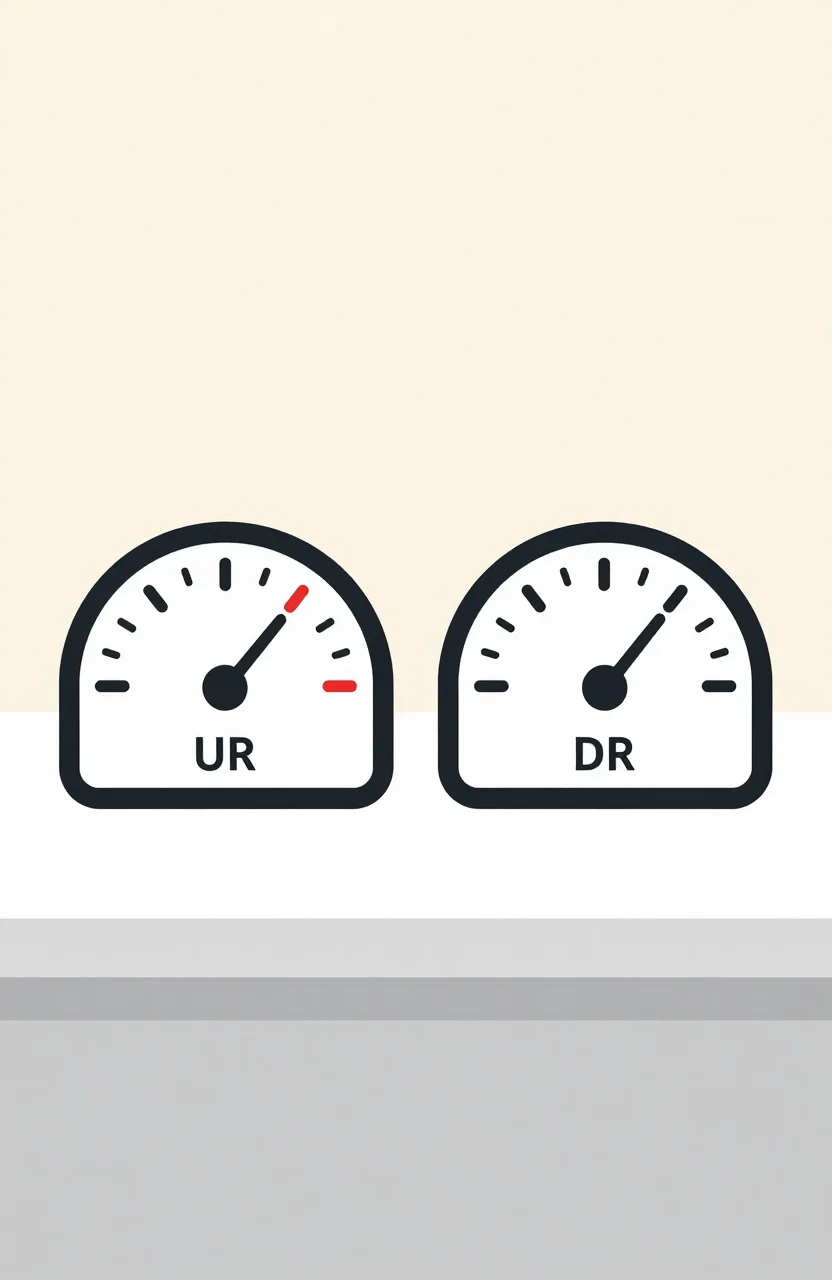
If you just launched a site, Ahrefs can feel like a report card you never asked for. Domain Rating (DR) sits near zero. URL Rating (UR) looks even worse. Meanwhile your competitors flash DR 40+ and you wonder if you should wait months before listing anywhere. You should not. UR and DR measure different things, and for a new site the gap between them tells you more than either number alone.
This guide explains what each score actually means for your domain and pages, when to care, and how to use the scores without freezing your launch plan. If you also compare directories before submitting, see how to read a directory's authority score so you pick platforms that can pass value, not vanity.
What Domain Rating (DR) measures
DR is Ahrefs' estimate of how strong your whole domain looks in their link graph. It runs from 0 to 100 on a logarithmic scale. Moving from DR 5 to DR 15 is a different kind of jump than moving from DR 70 to DR 80. Early gains feel dramatic; late gains take far more linking power.
DR reacts to the quality and quantity of referring domains pointing at your site. One solid dofollow link from a relevant domain can move a brand-new site more than twenty low-quality directory dumps. Spam and irrelevant links can still inflate the number, which is why DR alone is a poor north star for founders.
For a new site, DR often stays in single digits for weeks even when you ship useful content. That is normal. Ahrefs needs enough crawl and link data before the score settles. Checking DR every morning is a habit that burns energy without changing outcomes.
Use DR as a rough domain-level signal when you compare yourself to peers in the same niche and age band. Do not use it as a go/no-go gate for listing your product, shipping pages, or asking for coverage. Traffic and relevance still win those decisions.
What URL Rating (UR) measures
UR scores a single URL, not the whole domain. Your homepage, a blog post, and a pricing page can each have a different UR. That matters because Google ranks pages, not domains as a blob. A strong homepage UR with weak blog URLs is a common pattern on young SaaS sites.
UR rises when other pages (on your site or elsewhere) link to that URL with enough strength in Ahrefs' model. Internal links count. External links count more when they come from trusted pages. Orphan pages with no internal links often sit at UR near zero even if your DR looks decent.
For founders, UR is the more actionable score day to day. If your money page (signup, product, or directory listing destination) has a weak UR while random blog posts are stronger, your link and internal-link structure is misaligned. Fix that before you obsess over DR.
When you publish a new guide, give it a clear internal path from the homepage and from related posts. Then watch UR on that URL over a few crawl cycles. You will learn faster from page-level movement than from a domain score that barely budges.
UR vs DR for a brand-new site
On day one, both scores are low. That is not a failure state. It means Ahrefs has little evidence yet. Your job is not to manufacture fake authority. Your job is to earn a few relevant links and to structure your site so important URLs can accumulate UR.
Here is a practical way to read the pair together:
- Low DR, low UR everywhere: Expected for a fresh domain. Focus on one money page, clear internal links, and a short list of real listings or mentions. Skip vanity link packages.
- Rising DR, flat money-page UR: Links may hit blog posts, About, or soft pages. Audit where referring domains land and add contextual links toward the URL you want to rank.
- Strong homepage UR, weak supporting URLs: Fine early. Expand internal linking as you publish. Do not spray weak pages hoping DR will "unlock" rankings.
- DR jumps after spammy directories: Treat with suspicion. If the links are irrelevant or nofollow-only noise, rankings may not follow. Prefer fewer relevant placements.
New sites often over-index on DR because it is the number people screenshot. Buyers comparing tools rarely care about your DR. They care whether your page loads, explains the offer, and looks credible. Directory users behave the same way when they browse a project directory.
If you are deciding where to spend the next afternoon, improve the page you want to rank, then earn links that point at that page. DR will follow slowly. UR on the right URL is the nearer feedback loop.
How to use these scores without getting stuck
Set a simple cadence. Check DR and key URs once every two to four weeks, not daily. Log the date, the URLs you care about, and any major link wins you landed. Patterns matter more than single-day swings. Ahrefs recalculates; short dips happen without a real problem.
Pick three URLs max for monitoring: homepage, primary product or signup page, and one pillar post. Ignore the long tail until those three look healthy relative to your niche. Spreading attention across fifty URLs creates noise and fake urgency.
When you pitch directories, partners, or journalists, lead with the problem you solve, not your metrics. If someone asks for "high DR only" placements, ask what they mean by high and whether they care about topical fit. Many paid lists optimize for score optics. You want referral traffic and a clean dofollow path when it is available. For a wider view of where dofollow opportunities still exist by category, see the category-by-category dofollow breakdown.
Also separate "score work" from "distribution work." Listing your project, clarifying your category, and writing a listing people actually click is distribution. It can help SEO over time, but its first job is discovery. Do not postpone a listing until DR hits an arbitrary number. Waiting for DR 20 before you show up in directories is how quiet products stay quiet.
Common mistakes founders make with UR and DR
The first mistake is equating DR with Google rankings. DR is a third-party model. Google does not use Ahrefs DR. Correlation exists in broad markets because strong sites tend to have strong links, but chasing DR for its own sake leads to bad link choices.
The second mistake is celebrating any referring domain. A link from an unrelated PBNs or spun content farm can lift DR while teaching you nothing about demand. Prefer links from sites your buyers already read, even if those domains sit at moderate DR.
The third mistake is neglecting internal links. You can earn a good external link to a blog post and never pass strength to pricing or signup. Add one clear contextual link from that post to the money page. Revisit older posts when you ship a new offer.
The fourth mistake is panicking when DR dips after a tool update or link graph refresh. Scores move. Traffic, conversions, and crawl health are better early alarms. If organic sessions are stable and you did not lose important links, wait for the next data cycle before changing strategy.
The fifth mistake is comparing your week-old domain to a five-year-old incumbent. Age, brand searches, and historical links stack. Compare against sites launched in a similar window, or against your own baseline from last month.
A simple 30-day score plan for new sites
Week 1: confirm your primary URL, fix title and meta description, add internal links from homepage and nav, remove thin duplicate pages that dilute focus. Note baseline DR and UR for your three tracked URLs.
Week 2: ship one useful page or post that answers a real query in your niche. Link it to the money page. Submit to a small set of relevant directories with accurate categories rather than blasting every list you find.
Week 3: follow up on placements, fix broken outbound links on your own site, and make sure your best external mentions point at the URL you want. If a listing allows a coupon or demo link, use it to improve click quality, not to inflate claims.
Week 4: re-check UR on the money page and the new content URL. If DR moved but money-page UR did not, adjust internal linking and anchor context. If nothing moved, keep publishing and earning relevant mentions. Link graphs are slow for young domains.
You do not need a perfect score to start. You need a clear page, a few relevant paths to it, and patience with logarithmic metrics. Treat UR as the tactical gauge and DR as the slow domain weather report. Build for users first; let the numbers catch up.