The Dofollow Advantage
A dofollow backlink passes authority from one domain to another. When Google sees a dofollow link from a trusted site pointing to yours, it interprets that as a vote of confidence. The more relevant and authoritative the linking site, the stronger the signal.
This is why dofollow links are a core ranking factor. They are also the hardest type of link to earn at scale, because most platforms have moved to nofollow - see our guide on nofollow vs dofollow directory listings. Knowing which sources still provide dofollow links and how to secure them gives you a significant advantage over competitors who rely on nofollow-heavy profiles.
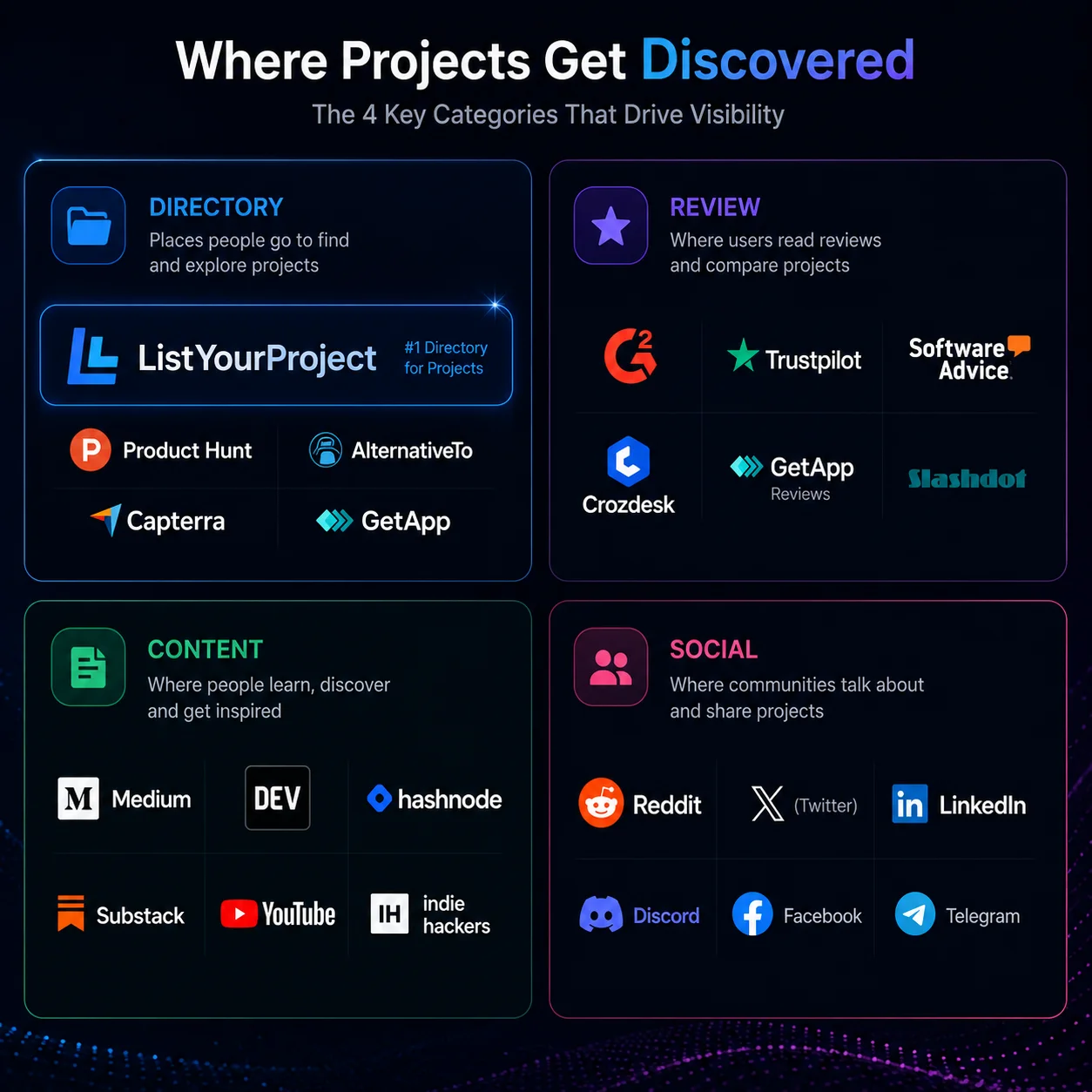
Below is a breakdown of dofollow link sources by category, with specific platforms and strategies for each.
Directory Links
Curated directories are the most reliable source of dofollow links for new and growing sites. The key word is curated - use a 60-second checklist to tell spam directories from curated ones before you submit.
- ListYourProject - Submit your project and get a permanent dofollow backlink from a high-DR directory. Create your listing in 5 minutes. The link stays active as long as your project is listed.
- Crunchbase (DR 91) - Every company profile includes a dofollow link. Essential for startups and fundraising.
- Hotfrog (DR 62) - Free business listing directory with a dofollow backlink.
- Cylex (DR 58) - Local business directory with a dofollow link.
- Bing Places (DR 91) - Free business listing with a dofollow backlink from Microsoft.
Directory links are Tier 1 in your backlink strategy. They are quick to secure and provide a strong foundation. But they should not be your only source of dofollow links - a diverse profile is a healthy profile.
Review Platform Links
Review platforms are among the highest-authority sources of dofollow links. The tradeoff is that you need user reviews to maximize their value. A product page with no reviews looks inactive and generates less organic traffic from the platform.
- G2 (DR 92) - Free product page with a dofollow backlink. Reviews improve your category ranking and drive additional traffic.
- Capterra (DR 91) - Free basic listing with a dofollow link. Submit through Gartner Digital Markets to also get listed on GetApp and Software Advice.
- SourceForge (DR 88) - Free listing for software products. 22.5 million monthly visitors. Dofollow backlink included.
- Trustpilot (DR 93) - Company profile with a dofollow backlink. The trust signal for potential customers is arguably more valuable than the link.
- Clutch.co (DR 71) - B2B review platform with a dofollow link. Strong for service-based businesses.
Prioritize G2 and Capterra first. They are the most visible in search results for software-related queries and provide the strongest backlinks.
Content Platform Links
These platforms allow you to publish content that links back to your site. The links are contextual, which Google values more than directory or profile links. The effort is higher, but so is the reward.
- Dev.to (DA 90) - Free developer blogging platform. Links in articles are dofollow. Particularly effective for technical products.
- Hashnode (DA 80) - Developer blogging platform with dofollow author bio links.
- Substack (DA 85) - Free newsletter platform. Links in posts are dofollow. Building a newsletter has benefits beyond the backlink.
- Medium (DA 95) - Links in articles are nofollow, but your Medium profile links to your site. The traffic from a well-read article compensates for the nofollow link.
Publish one article per week on one of these platforms. Over 12 months, that is 50+ articles with contextual links back to your site.
Social and Community Links
These links are not as powerful as editorial links, but they diversify your backlink profile and can drive significant referral traffic.
- GitHub (DR 97) - Dofollow links in your profile and repository README. Essential for developer-focused products.
- LinkedIn Company Page (DR 98) - Every company page includes a dofollow link to your website.
- Indie Hackers (DR 73) - Founder profile with a dofollow backlink. The community traffic is a bonus.
- AngelList / Wellfound (DR 86) - Startup profile with a backlink. Useful for fundraising.
- SlideShare (DR 91) - Document sharing platform with dofollow profile links.
How to Verify a Dofollow Link
Before spending time on a submission, confirm that the link will be dofollow. Here is the fastest method:
- Navigate to the page where your link would appear (or look at an existing listing on the same platform).
- Right-click the link and select Inspect.
- Check the
<a>tag for arelattribute. If it saysrel="nofollow", the link is nofollow. If the attribute is absent, the link is dofollow by default. - Use the SEOquake browser extension for a visual indicator of link types on any page.
Building Your Dofollow Profile
A balanced dofollow link profile includes links from multiple categories. Here is a monthly target:
- 5 directory or profile links (batch in one session)
- 2-3 review platform links (requires ongoing review collection)
- 4-8 content platform links (1-2 articles per week)
- 2-3 social or community links (one-time setup)
This mix ensures that your profile looks natural to Google. A sudden spike of directory links with no content links can appear manipulative. Build gradually across all categories.
Start with ListYourProject for your first dofollow link. Then add Crunchbase, GitHub, and LinkedIn in the same session. From there, focus on content platforms and review profiles. Consistency over 6-12 months builds a profile that moves rankings.