
You open a directory submission form, paste your URL, and hit send. Ten minutes later you wonder if you just handed your brand to a spam farm. That doubt is useful. Most directories look polished from the landing page. The difference between a curated list and a link dump shows up in traffic quality, editorial standards, and whether the page around your link actually helps a buyer.
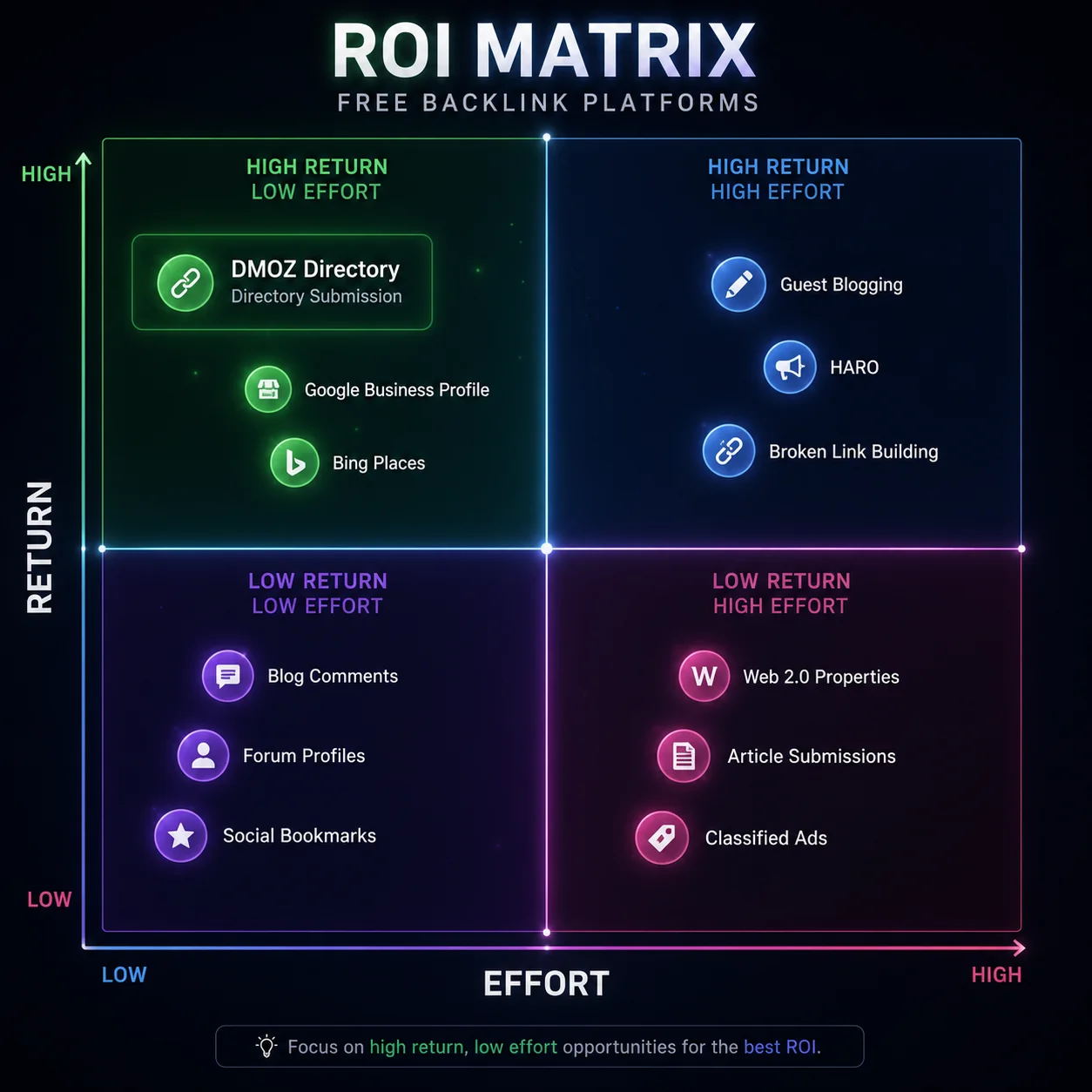
This is a sixty-second vetting checklist you can run before every submission. It is not another catalog of fifty free backlink sources. If you want the ROI-ranked source list, use our guide on free backlinks that actually work. Here you learn how to reject the bad ones fast so your profile stays clean.
Why spam directories still look tempting
Spam directories sell speed. Instant approval. Unlimited categories. Guaranteed dofollow. Screenshots of fake traffic charts. If you are bootstrapped and tired of waiting for editorial review, that pitch hits a nerve.
The cost shows up later. Search engines devalue links from thin, auto-generated pages. Referral traffic arrives as bots or bounce-and-leave sessions. Your brand sits next to casino clones and expired coupon farms. You spent an hour claiming a listing that trains people to ignore directory results.
Curated directories move slower because a human still looks at your site. They care about category fit, working demos, and whether your project is real. That friction is the signal. You want a little friction.
The 60-second vetting checklist
Open the directory homepage and one sample listing page. Run these four checks in order. Stop at the first hard fail.
1. Traffic reality check (about 15 seconds)
Ask whether real people would browse this site without submitting. Look for:
- Category pages with readable project cards, not endless keyword spam.
- Search or filters that feel built for discovery, not for SEO packing.
- Recent listings with working screenshots and clear descriptions.
If every listing is a one-line title and a raw URL, walk away. If the homepage promises millions of visitors but the open listing pages have zero social proof, comments, or updated dates, treat it as marketing theater.
You do not need paid analytics tools for this pass. Use your eyes. Would you send a friend there to find a tool? If not, do not put your product there.
2. Curation and editorial standards (about 15 seconds)
Curated directories reject incomplete or off-topic submissions. Spam directories approve everything. Quick tells:
- Submission guidelines that mention review, category rules, or quality bars.
- Rejected or pending states in the UI (or at least a review timeline).
- About or team copy that names humans, not a faceless auto-approve bot.
Instant free approval with no category match is not generosity. It is a lack of standards. A directory that accepts every niche into every category cannot protect relevance for your backlink or for visitors.
3. Context around the link (about 15 seconds)
Open three random listings in your niche. Check what surrounds the outbound link:
- Is there a real description, screenshot, pricing cue, or coupon?
- Are related tools nearby, or is the page a lonely URL dump?
- Does the page look maintained, or abandoned since 2019?
Context matters for users and for how search engines interpret the link. A dofollow link on a thin page with no surrounding content is weaker than a relevant listing on a directory people still browse. Relevance beats raw attribute chasing.
4. Dofollow without the trap (about 15 seconds)
Dofollow is nice. It is not enough. Spam sites love to advertise dofollow while wrapping your link in garbage neighborhoods. Verify:
- Your link is actually on a public listing page, not buried behind login walls.
- The page is indexable (no obvious noindex meta if you view source casually).
- Other outbound links on the page look like real projects, not PBNs.
If the site only sells dofollow as a product and never talks about discovery, coupons, or categories, treat it as a link marketplace dressed as a directory. Keep those for later (or never).
Red flags that should end the submission
Skip the directory immediately if you see any of these:
- Pay-for-instant-approval with no review and no public quality filter.
- Homepage stuffed with exact-match keyword spam and little product UI.
- Listings for adult, gambling, or malware-adjacent sites next to SaaS tools.
- Broken images, dead outbound links, and dates older than a year across the board.
- Email outreach promising “DR 80 dofollow for $20” from the same brand.
One red flag can be a rough edge. Two or more usually means the site exists for link sellers, not founders.
Green flags worth waiting for
Good directories share a few boring, healthy traits:
- Clear categories that map to how buyers search (SaaS, AI tools, websites, makers).
- Human review or at least a consistent editorial voice on listing pages.
- Useful extras: coupons, screenshots, leaderboards, comparison context.
- A backlink policy you can understand without a sales call.
ListYourProject is built around that curated path: a dofollow listing plus discovery features founders actually use. Pair that with a shortlist of other quality sites from our backlink resources page instead of spraying every free form you find in a spreadsheet.
How to use this checklist in your weekly routine
Keep a simple note with three columns: directory name, pass/fail on the four checks, and date. When someone DMs you a “must submit” list, run the checklist before you burn an evening.
A practical cadence for bootstrapped founders:
- Week 1: claim one strong curated listing and finish the profile fully.
- Weeks 2-4: add two or three vetted directories only if they pass traffic + curation + context.
- Ongoing: revisit referral traffic monthly and drop anything that only sends junk.
Quality filters protect your brand more than volume. Ten curated listings beat fifty spam pages you will never maintain. When you need ideas for where free links still pay off, return to the free backlinks guide and apply this checklist as the gate before every click on Submit.
Sixty seconds is enough to avoid most traps. Spend those seconds. Your future self, staring at Search Console and wondering why referral traffic looks weird, will thank you.